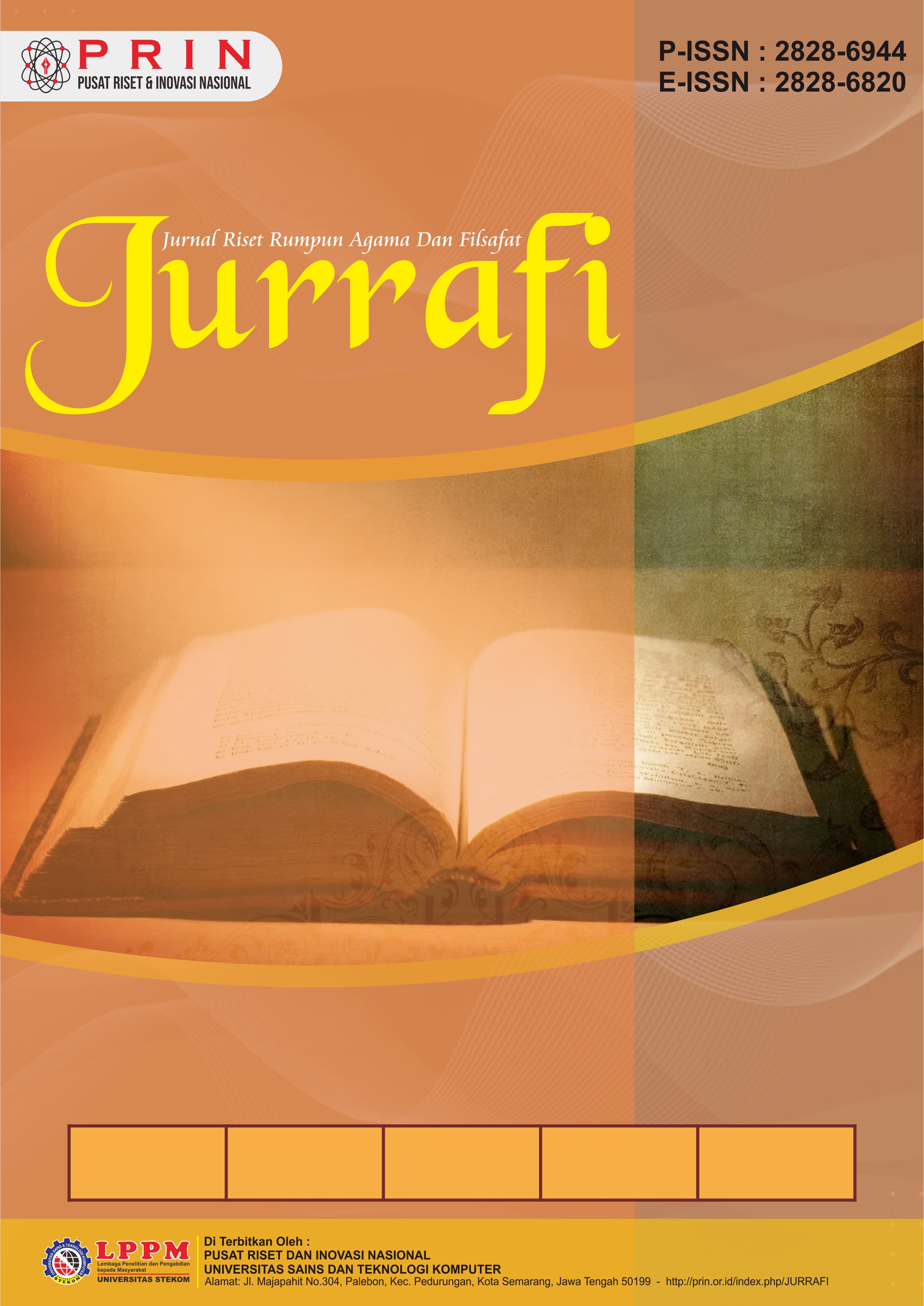
Implementasi Nilai-Nilai Al-Qur’an dalam Pelayanan Jamaah Umroh di Safarindo Albarokah Umroh
Studi Living Qur’an Perspektif QS. An-Nahl: 90
DOI:
https://doi.org/10.55606/jurrafi.v3i1.9537Keywords:
‘Adl, Ihsan, Living Qur’an, QS. An-Nahl: 90, Umrah ServiceAbstract
This study examines the implementation of Qur’anic values in the services of Umrah pilgrims at Safarindo Albarokah Umroh using a Living Qur’an approach based on QS. An-Nahl: 90. The verse emphasizes three core values: ‘adl (justice), ihsan (excellence), and ita’ dzil qurba (social care), which serve as guiding principles in service management. This research employs a qualitative descriptive method using observation, in-depth interviews, and documentation. The findings show that all three values have been systematically implemented in administrative services, religious guidance, accompaniment in the Holy Land, and post-travel services. The value of ‘adl is reflected in transparent pricing and fair treatment of pilgrims, ihsan is demonstrated through excellent, responsive, and continuous service, while ita’ dzil qurba is realized through social programs such as scholarships for underprivileged pilgrims and special services for elderly and disabled pilgrims. This study concludes that Safarindo Albarokah Umroh integrates Qur’anic values into its operational system, contributing to the development of Living Qur’an studies in Islamic business practices.
Downloads
References
Ahimsa-Putra, H. S. (2012). The living Al-Qur'an: Beberapa perspektif antropologi. Walisongo: Jurnal Penelitian Sosial Keagamaan, 20(1), 235–260. https://doi.org/10.21580/ws.20.1.198
Al-Ashfahani, R. (2009). Mufradat alfaz al-Qur'an. Dar al-Qalam.
Al-Maraghi, A. M. (1946). Tafsir al-Maraghi. Mathba'ah Mustafa al-Babi al-Halabi.
Al-Qurtubi, M. A. (2006). Al-jami' li ahkam al-Qur'an. Muassasah al-Risalah.
Al-Razi, F. (1990). Mafatih al-ghayb (Tafsir al-Kabir). Dar Ihya al-Turath al-Arabi.
Al-Syatibi, I. (1997). Al-muwafaqat fi ushul al-syari'ah. Dar Ibn Affan.
Al-Thabari, M. J. (2001). Jami' al-bayan fi ta'wil al-Qur'an. Muassasah al-Risalah.
Beekun, R. I., & Badawi, J. A. (1999). The leadership process in Islam. International Institute of Islamic Thought.
Chapra, M. U. (2000). The future of economics: An Islamic perspective. The Islamic Foundation.
Esack, F. (1997). Qur'an, liberation and pluralism. Oneworld Publications.
Hassan, A., & Hippler, W. J. (2014). Spirituality and organizational performance: A literature review. European Journal of Business and Management, 6(10), 73–83.
Ibn 'Asyur, M. T. (1984). Tafsir al-tahrir wa al-tanwir. Dar al-Tunisia li al-Nasyr.
Ibn Katsir, I. (2004). Tafsir al-Qur'an al-'adhim. Dar Thayyibah.
Kementerian Agama RI. (2023). Laporan penyelenggaraan ibadah umroh tahun 2023. Kementerian Agama Republik Indonesia.
Mansur, M. (2007). Living Qur'an dalam lintasan sejarah studi Qur'an. In S. Syamsuddin (Ed.), Metode penelitian living Qur'an dan hadis (pp. xx–xx). TH-Press.
Miles, M. B., Huberman, A. M., & Saldaña, J. (2014). Qualitative data analysis: A methods sourcebook (3rd ed.). SAGE Publications.
Nawawi, Y. (2001). Syarh shahih Muslim. Dar al-Kutub al-Ilmiyyah.
Parasuraman, A., Zeithaml, V. A., & Berry, L. L. (1988). SERVQUAL: A multiple-item scale for measuring consumer perceptions of service quality. Journal of Retailing, 64(1), 12–40.
Qutb, S. (2004). Fi zhilal al-Qur'an. Dar al-Syuruq.
Shihab, M. Q. (2002). Tafsir Al-Misbah: Pesan, kesan, dan keserasian Al-Qur'an. Lentera Hati.
Syamsuddin, S. (Ed.). (2009). Hermeneutika Al-Qur'an dan hadis. eLSAQ Press.
Downloads
Published
How to Cite
Issue
Section
License
Copyright (c) 2024 Mery Agustina, Mutiara Fahliza, Ahmad Raihan Lubis, Hamdani Syahputra, Meilani Meilani, Ali Darta

This work is licensed under a Creative Commons Attribution-ShareAlike 4.0 International License.
_001.jpg)