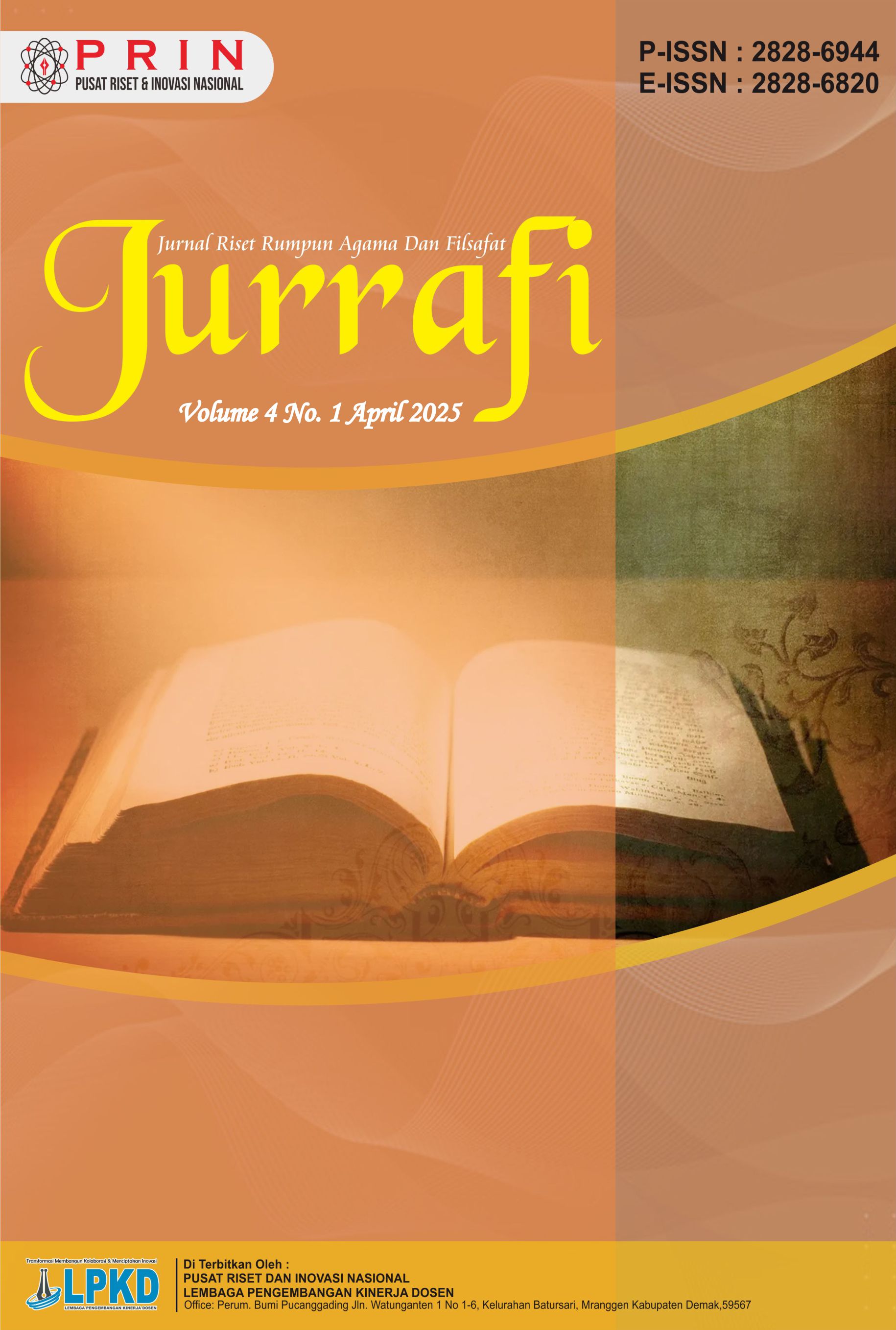
Tinjauan Literatur Mengenai Perceraian dalam Hukum Islam: Sebab dan Konsekuensinya
DOI:
https://doi.org/10.55606/jurrafi.v4i1.4319Keywords:
Child Custody, Divorce, Islamic Law, Premarital EducationAbstract
Divorce is a complex social phenomenon with significant impacts on families, especially children. In Islamic law, divorce is permitted as a last resort when household life cannot be maintained, although it is considered the most hated lawful act by Allah. This study analyzes divorce from the perspective of Islamic family law, focusing on the causal factors, legal impacts, and preventive measures. The main factors of divorce include disharmony in relationships, economic problems, the presence of a third party, and domestic violence. The legal impacts include child custody, division of property, and maintenance obligations, which are often not fulfilled by the ex-husband, causing inequality in legal protection for women and children. Recommended preventive measures include premarital education, family counseling based on Islamic values, and strengthening mediation institutions such as BP4. This study uses qualitative methods with literature analysis to provide a comprehensive understanding of divorce in Islamic law and its implications in Indonesia.
Downloads
References
Abdul-Rahman, K. (1994). Islamic jurisprudence according to the four Sunni schools (Vol. 2). London: Garnet Publishing.
Ahmed, L. (1992). Women and gender in Islam: Historical roots of a modern debate. New Haven: Yale University Press.
al-Maududi, A. A. (2006). The laws of marriage and divorce in Islam. Lahore: Islamic Publications.
Anwar, S. (2016). Konsekuensi perceraian terhadap hak asuh anak dalam hukum Islam. Al-Ahwal: Jurnal Hukum Keluarga Islam, 9(1), 42–55.
Doi, A. W. (1989). Women in Shari’ah (Islamic law). London: Ta-Ha Publishers.
Esposito, J. (2001). Women in Muslim family law (2nd ed.). Syracuse, NY: Syracuse University Press.
Hasan, M. R. (1985). The family structure in Islam. Indianapolis: American Trust Publications.
Hassan, A. (2004). The doctrine of divorce in Islamic law. Kuala Lumpur: Islamic Book Trust.
Hidayat, N. S. (2019). Perceraian dalam perspektif Islam: Telaah terhadap Al-Qur’an dan Hadis. Jurnal Hukum Islam, 17(1), 1–10.
Mahmud, S. (2006). Divorce under Islamic law. Islamic Studies, 45(2), 213–229.
Nyazee, I. A. (2000). Outlines of Islamic jurisprudence. Islamabad: International Islamic University.
Peters, R. (2003). Islamic criminal law in Nigeria. Ibadan: Spectrum Books.
Quraishi, M. (2000). Her honour: An Islamic critique of the rhetoric of Muslim women's oppression. Feminist Legal Studies, 8(3), 337–358.
Rahman, F. (1965). Islamic methodology in history. Karachi: Central Institute of Islamic Research.
Saifulloh, I. (2018). Kompilasi Hukum Islam sebagai produk politik hukum di Indonesia. Al-Mazahib: Jurnal Perbandingan Hukum, 6(1), 85–98.
Syahrizal, H. (2020). Perceraian dalam Islam: Perspektif sosiologis dan yuridis. Al-Muqaranah: Jurnal Perbandingan Hukum dan Mazhab, 3(2), 57–70.
Downloads
Published
How to Cite
Issue
Section
License
Copyright (c) 2025 Jurnal Riset Rumpun Agama dan Filsafat

This work is licensed under a Creative Commons Attribution-ShareAlike 4.0 International License.
_001.jpg)