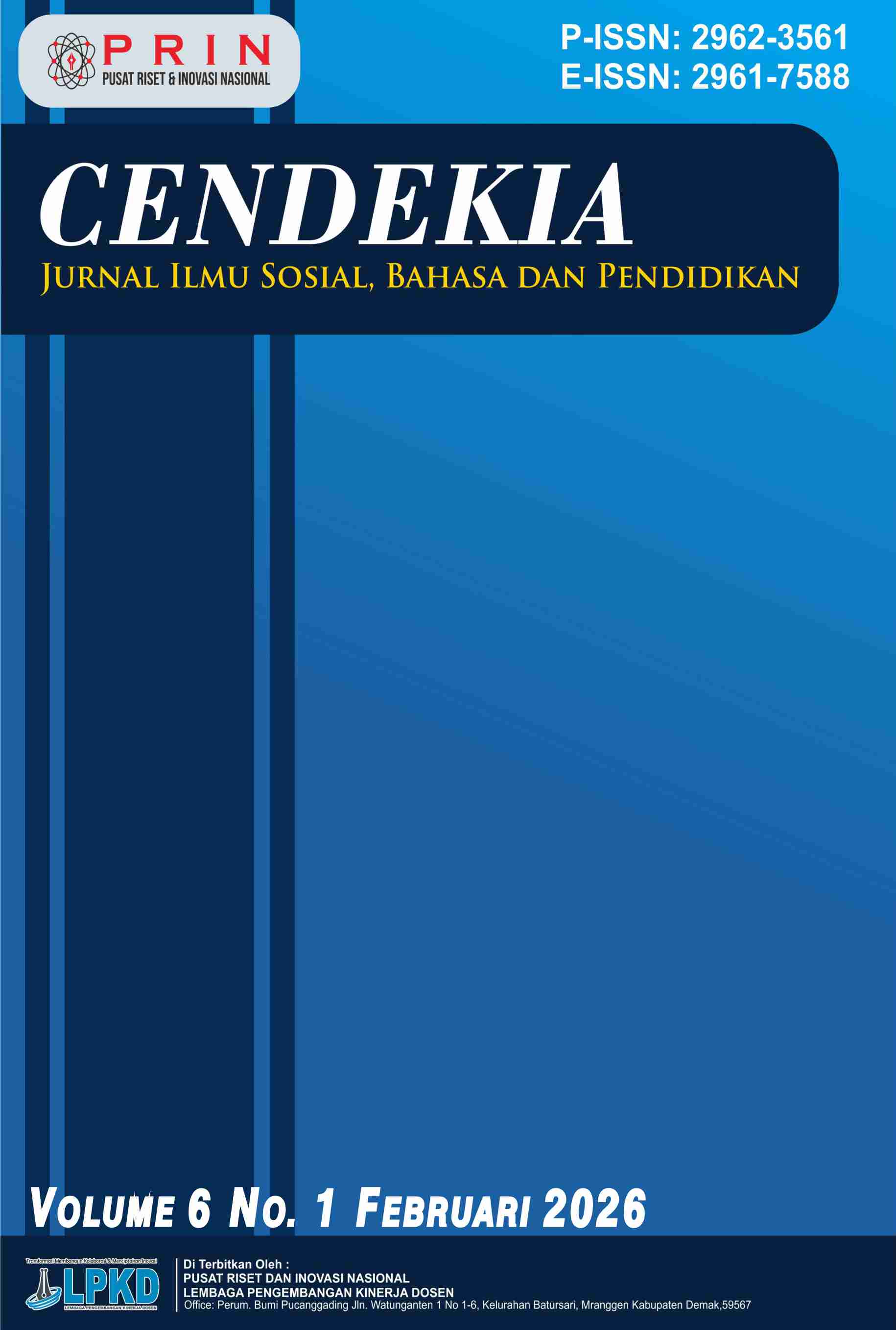
Korupsi di Indonesia dalam Perspektif Hierarki Kebutuhan Abraham Maslow
DOI:
https://doi.org/10.55606/cendekia.v6i1.9371Keywords:
Abraham Maslow, Corruption, Hierarchy of Needs, Humanistic Psychology, Moral IntegrityAbstract
Corruption is one of the most significant challenges still facing Indonesia due to its far-reaching impact on social, economic, political, and legal life. Until now, corruption has largely been understood as a violation of the law or a failure of the government system. This article aims to analyze the phenomenon of corruption in Indonesia through the lens of Abraham Maslow’s Hierarchy of Needs to understand the psychological motivations underlying corrupt behavior. This study employs a qualitative method using a literature review approach, examining various scientific literature, books, journals, and data related to corruption in Indonesia. The findings indicate that corruption does not arise solely from economic needs but is also linked to distortions in the fulfillment of the need for security, social needs, the need for recognition, and the need for self-actualization. Corruption serves as a means to obtain power, social status, and instant recognition through the abuse of authority. Additionally, weak moral integrity and a materialistic culture further reinforce corrupt behavior. Therefore, combating corruption requires an approach that is not only focused on law enforcement but also on character building, moral education, and the cultivation of a culture of integrity in societal and national life.
Downloads
References
Ajeng, R. (2017). Membasmi Korupsi. Relasi Inti Media.
Arsyad, J. H. (2015). Korupsi Dalam Perspektif HAN (2nd ed.). Sinar Grafika.
Bagas, M. A. (2020). Relevansi Teori Hierarki Kebutuhan Abraham Maslow Terhadap Motivasi Kerja Anggota Organisasi Penyuluhan Agama Islam. Syifaul Qulub: Jurnal Bimbingan Dan Konseling Islam, 1(2), 100–108.
Fauzanto, A. (2023). Pembuka: Wajah Korupsi di Indonesia. In N. Rismawati (Ed.), Wajah Korupsi di Indonesia: Himpunan Artikel Ilmiah-Populer Terangkai (pp. 1–14). Widina.
Feriska, V. P., Rizky, A., Handayani, P., Sari, D. A., & Andika, R. P. (2025). Penyebab Korupsi Dalam Perspektif Teoritis: Faktor Internal Dan Eksternal Dikalang Masyarakat. Jurnal Riset Multidisiplin Edukasi, 2(12), 49–59.
Irmayanti, I. G. A. K. W., & Yasa, I. N. P. (2024). Analisis Dampak Kasus Korupsi Pejabat Pajak Terhadap Kepercayaan Masyarakat Dan Keadilan Perpajakan (Studi Kasus Pada Kasus Korupsi Pejabat Pajak Rafael Alun Trisambodo). Jurnal Ilmiah Akuntansi Dan Humanika, 14(3), 451–458. https://doi.org/10.23887/jiah.v14i3.86849
Joniarta, I. W. (2018). Banalitas korupsi di Indonesia. Jurnal Ilmiah Dinamika Sosial, 2(1), 149–156.
Kenneth, N. (2024). Maraknya kasus korupsi di Indonesia tahun ke tahun. JLEB: Journal of Law, Education and Business, 2(1), 335–340.
Khalid, A. (2014). Penafsiran hukum oleh hakim dalam sistem peradilan di Indonesia. Al-Adl: Jurnal Hukum, 6(11).
Kita, K. P. K. K. K. (2017). Anatomi Kasus-Kasus Besar Dalam Kajian Interdisipliner. Jakarta: Komisi Pemberantasan Korupsi.
Koswara, E. (1991). Teori-teori kepribadian: Psikoanalisis, Behaviorisme, Humanistik. PT Eresco.
Lopa, B. (2001). Kejahatan Korupsi dan Penegakan Hukum. Kompas, 8.
Maslow, A. (1984). Motivasi dan Kepribadian: Teori Motivasi dengan Ancangan Hirarki Kebutuhan Manusia. PT. Pustaka Binaman Pressindo.
Maslow, A. H. (1943). A theory of human motivation. Psychological Review, 50(4), 370.
Mendari, A. S. (2013). Aplikasi teori hierarki kebutuhan Maslow dalam meningkatkan motivasi belajar mahasiswa. Widya Warta.
Nurhaeni. (2016). Korupsi Musuh Kita Bersama. Yogyakarta: Familia,.
Nurwahidah, A., Wahyuni, I., & Mubarok, A. (2023). Hierarki Kebutuhan Tokoh Utama dalam Novel Represi Karya Fakhrisina Amalia: Kajian Psikologi Sastra Abraham Maslow. Ilmu Budaya: Jurnal Bahasa, Sastra, Seni, Dan Budaya, 7(4), 1399–1408.
Pahlevi, F. (2022). Pemberantasan Korupsi di Indonesia Perspektif Legal System Lawrence M. Freidmen. El-Dusturie, 1(1), 23–42. https://doi.org/10.21154/eldusturie.v1i1.4097
Pancaningrum, R. K. (2015). Humanisme Dalam Peraturan Perundang-Undangan Korupsi Di Indonesia. Jurnal Komunikasi Hukum (JKH), 1(2).
Panjaitan, B. S. (2022). Dari Advokat Untuk Keadilan Sosial. Deepublish.
Prasetyo, A. (2022). Penegakan Hukum di Indonesia. UNISRI Press.
Pusparisa, Y. D. R. (2025). Menteri ESDM: BBM Sudah Sesuai Standar. Kompas.Com, 15.
Rassat, F. S. (2024). Catatan Pemberantasan Korupsi KPK 2024. ANTARA.
Rosyidi, H. (2015). Psikologi Kepribadian: Paradigma Traits, Kognitif, Behavioristik Dan Humanistik (p. 106). Jaudar Press.
Semiawan, C. R. (2010). Metode penelitian kualitatif. Grasindo.
Setiadi, W. (2018). Korupsi Di Indonesia. Jurnal Legislasi Indonesia, 15(3), 249–262.
Suyatmiko, W. (2025). Indeks Persepsi Korupsi 2024: “Korupsi, Demokrasi, dan Krisis Lingkungan.” Transparency International.
Tampubolon, P., Panggabean, M. L., & Tampubolon, M. (2024). Kajian Kriminologi Korupsi Di Sektor Publik Di Indonesia. Berajah Journal, 4(2), 211–234.
Thoha, M. (2007). Perilaku organisasi konsep dasar dan aplikasinya. Raja Grafindo Persada.
Waluyo, B. (2014). Optimalisasi pemberantasan korupsi di indonesia. Jurnal Yuridis, 1(2), 162–169.
Downloads
Published
How to Cite
Issue
Section
License
Copyright (c) 2026 Felix Riondi Sugar, Bernardino Suryatno Agas, Petrus Paulus Molan Jawang, Eugenius Advento Luahane, Kristoforus Mage, Hironimus Naras, Apriliano Peterpen Ajen, Simplisius Seke Kawa

This work is licensed under a Creative Commons Attribution-ShareAlike 4.0 International License.