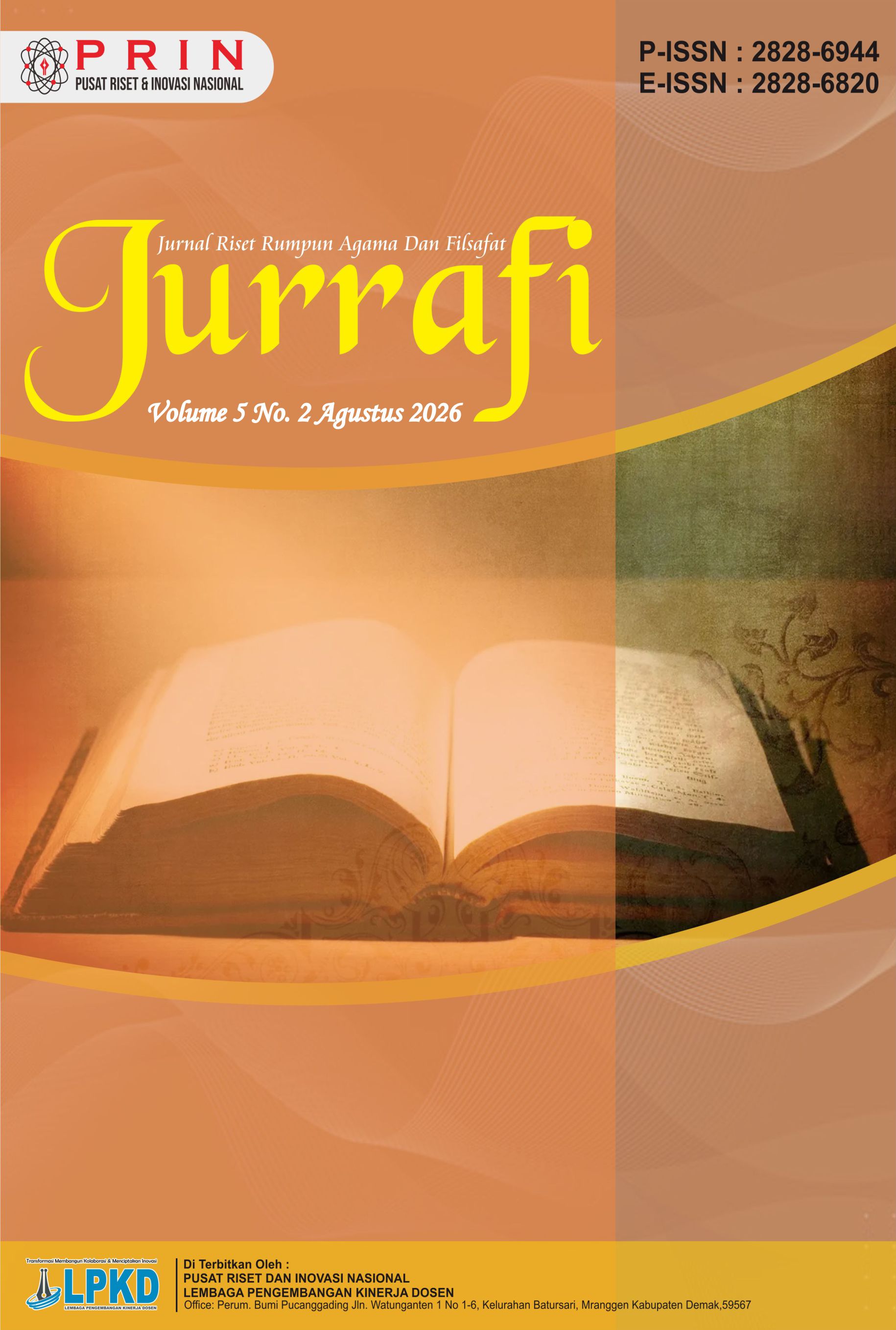
Membela Iman dengan Akal: Kontribusi Anselmus bagi Kritik Anti Intelektualisme Teologis
DOI:
https://doi.org/10.55606/jurrafi.v5i2.9140Keywords:
Faith, Philosophy, Reason, Theology, UnderstandingAbstract
This study examines the contribution of Anselmus dari Canterbury in addressing the tendency of anti-intellectualism in certain theological practices that separate faith from reason. The background of this research lies in the growing assumption that faith does not require philosophical reflection, which often leads to subjective and uncritical interpretations of sacred texts. The objective of this study is to analyze Anselm’s concept of fides quaerens intellectum as a framework for integrating faith and reason. This research employs a qualitative method with a philosophical and hermeneutical approach, focusing on textual analysis of Anselm’s works and relevant scholarly literature. The findings show that Anselm does not oppose faith and reason but emphasizes that faith naturally seeks understanding. This integration prevents arbitrary interpretations and strengthens the rational foundation of belief. The study implies that Anselm’s thought remains relevant for contemporary theological discourse, especially in promoting a balanced and critical understanding of faith in modern religious contexts.
Downloads
References
Bertens, K.. (2014). Sejarah filsafat Barat: Abad pertengahan. Jakarta: Gramedia.
Chalmers, David J.. (2022). Reality+: Virtual worlds and the problems of philosophy. New York, NY: W. W. Norton & Company.
Clark, Andy. (2023). The experience machine: How our minds predict and shape reality. Oxford: Oxford University Press.
Dister, N.. (1987). Pengantar filsafat. Yogyakarta: Kanisius.
Ford, David F.., & Muers, Rachel. (Eds.). (2025). T&T Clark handbook of modern theology. London: Bloomsbury Academic.
Hanegraaff, H.. (2013). Christianity in crisis. Jakarta: Literatur Perkantas.
Hardiman, F. B.. (2015). Seni memahami: Hermeneutik dari Schleiermacher sampai Derrida. Yogyakarta: Kanisius.
Hardono Hadi. (1994). Epistemologi: Filsafat pengetahuan. Yogyakarta: Kanisius.
Kleden, Ignas. (2004). Sikap ilmiah dan kritik kebudayaan. Jakarta: LP3ES.
Magnis-Suseno, Franz. (2006). Menalar Tuhan. Yogyakarta: Kanisius.
Riyanto, Armada. (2013). Relasionalitas: Filsafat fondasi interpretasi. Yogyakarta: Kanisius.
Sudarminta, J.. (2002). Filsafat pengetahuan. Yogyakarta: Kanisius.
Sugiharto, Bambang. (1996). Postmodernisme: Tantangan bagi filsafat. Yogyakarta: Kanisius.
Baucham, Voddie. (2015). Why philosophy is dangerous for Christians [Video]. YouTube. https://www.youtube.com/watch?v=YpQ1
MacArthur, John. (2012). The sufficiency of Scripture [Video]. YouTube. https://www.youtube.com/watch?v=Zk
Piper, John. (2013). Faith and reason: What is the role of thinking? [Video]. YouTube.
Sproul, R. C.. (2014). The importance of theology and thinking [Video]. YouTube.
Washer, Paul. (2010). True conversion [Video]. YouTube. https://www.youtube.com/watch?v=uuabITeO4l8
Surudiaman Lase, Iman Pasrah Zay, Adelia Tamo Ina, & Sandra Rosiana Tapilaha. (2025). Membangun Iman Melalui Pembelajaran Kolaboratif dalam Pembelajaran Pendidikan Agama Kristen. Jurnal Riset Rumpun Agama Dan Filsafat, 4(1), 244–253. https://doi.org/10.55606/jurrafi.v4i1.4472
Sealtiel Daeli, Alfin Yunus Gulo, & Malik Bambangan. (2025). Kajian Teologis tentang Hikmat menurut Amsal 1: 7: Pedoman Etika bagi Pertumbuhan Iman Kristen. Jurnal Riset Rumpun Agama Dan Filsafat, 4(1), 297–310. https://doi.org/10.55606/jurrafi.v4i1.4581
Downloads
Published
How to Cite
Issue
Section
License
Copyright (c) 2026 Teovilu Ondo, Yohanes Brekman Bedo Rado, Tarsisius Jeharus

This work is licensed under a Creative Commons Attribution-ShareAlike 4.0 International License.

_001.jpg)