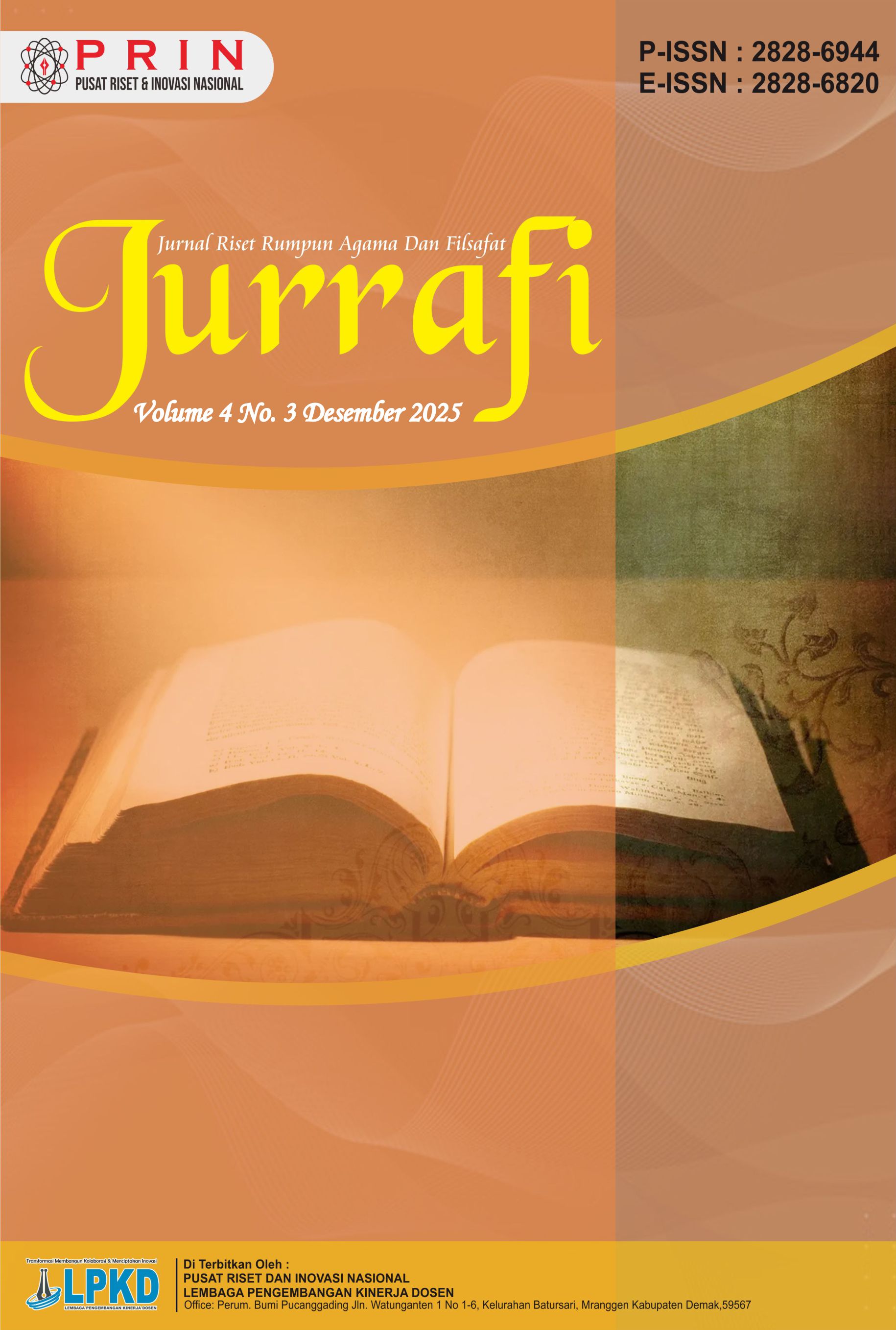
Kisah Wahyu Pertama Nabi Muhammad SAW: Awal Munculnya Islam di Jazirah Arab Abad ke-7 Masehi
Awal Munculnya Islam di Jazirah Arab Abad ke-7 Masehi
DOI:
https://doi.org/10.55606/jurrafi.v4i3.7036Keywords:
Education, First Revelation, Hira Cave, Islamic Literacy, Prophet Muhammad SAWAbstract
This research discusses the event of the first revelation descending upon Prophet Muhammad SAW in the Cave of Hira as the starting point for the birth of Islamic civilization. The background of this research stems from the social and spiritual conditions of pre-Islamic Arab society, which was in the era of ignorance, characterized by idol worship, social inequality, and the loss of human values. The purpose of this research is to reconstruct the historical, theological, and philosophical meanings of the first revelation and relate them to the relevance of educational and moral values in the modern context. The method used is a qualitative study with a descriptive-analytical approach, utilizing primary and secondary literature from interpretive sources, historical texts, and scientific journals. The research results indicate that the command "Iqra'" in Surah Al-'Alaq verses 1-5 is the foundation for the emergence of literacy, education, and scientific traditions in Islam. This value affirms the importance of the integration between faith and science as the foundation of civilization. The implications of this research confirm that the spirit of "Iqra'" must be revived in the modern education system so that young Muslim generations can develop critical, ethical, and moral character amidst the current of globalization.
Downloads
References
Auni, L., Nasution, N. A., & Hasibuan, S. (2025). Nuzulul Qur’an: Aktualisasi metode pendidikan Islam. Jurnal Ilmiah Ilmu Pemerintahan, 9, 5729–5734.
Anisa, R. (2023). Budaya Arab pra dan pasca Islam: Tinjauan sosio-kultural. Jurnal Sabana: Kajian Ilmu Sosial dan Humaniora, 9(2), 34–48. https://doi.org/10.55123/sabana.v2i2.1337
Amelia, A., Manurung, K. A., & Purnomo, D. B. (2022). Peranan manajemen sumber daya manusia dalam organisasi. Mimbar Kampus: Jurnal Pendidikan dan Agama Islam, 21(2), 128–138. https://doi.org/10.47467/mk.v21i2.935
Amran, R., Apriyani, A., & Dewi, N. P. (2022). Peran penting kelengkapan rekam medik di rumah sakit. Baiturrahmah Medical Journal, 1(September 2021), 69–76.
Anggraini, D., Nasution, M. I., & Prayogi, M. A. (2023). Optimalisasi kinerja pegawai: Stres kerja dan kualitas kehidupan kerja dengan mediasi kepuasan kerja. Jurnal Ilmiah Manajemen dan Bisnis, 24(2), 170–198.
Elsanti, N. S., Aman, M. M., & Fa, S. (2025). Nuzulul Qur’an: Makna dan hikmahnya bagi umat Islam. Jurnal Pendidikan Islam, 3, 422–428.
Ernanik, & Syarifah, D. (2022). Pengaruh workplace aggression terhadap stres kerja pada perawat dengan structural empowerment sebagai variabel moderator. Buletin Riset Psikologi dan Kesehatan Mental, X, 1–9.
Fauzan, A. (2023). Etika bisnis Islam dan dampaknya terhadap perdagangan Arab awal. Jurnal Ekbis: Ekonomi dan Bisnis Islam, 5(3), 41–55.
Fathony, A. A., & Sitokmabin, L. (2024). Pengaruh akuntabilitas dana desa dan partisipasi masyarakat terhadap pembangunan infrastruktur pada pemerintahan desa dan kelurahan di Kecamatan Baleendah Kabupaten Bandung. Jurnal Akuntansi Fakultas Ekonomi UNIBBA, 15(1), 117–133.
Hasugian, N., Mukti, A., & Dahlan, Z. (2022). Dinamika pembentukan kebijakan melalui metode dakwah pada kajian kepemimpinan Nabi Muhammad SAW: Studi literatur. GOVERNANCE: Jurnal Ilmiah Kajian Politik Lokal dan Pembangunan, 8(3), 176–182. https://doi.org/10.56015/governance.v8i3.56
Hasanah, M. (2023). Nuzulul Qur’an dalam kajian Al-Qur’an. Tafakkur: Jurnal Ilmu Al-Qur’an dan Tafsir, 3(1), 46–61. https://ejurnal.stiqarrahman.ac.id/index.php/tafakkur/article/view/80/60
Hidayat, M. (2024). Sistem kepercayaan paganisme masyarakat Arab pra-Islam. Jurnal Pendidikan dan Teknologi Administrasi (JPTAM), 10(1), 55–66.
Kartika, D. S. Y., Sambali, A., Pakpahan, B., Mutimmul, N., & Aprilia, S. (2023). Peringatan Nuzulul Qur’an di Masjid an-Nur, Desa Karanglo, Kabupaten Jombang. Relinesia: Jurnal Kajian Agama dan Multikulturalisme Indonesia, 2(1), 36–46.
Khairunnisa, R., Harahap, N. S., & Adawiyah, S. W. (2023). Nuzūl Al-Qur’Ān: Gradualization process and living guidelines for Indonesian society. MUSHAF: Jurnal Tafsir Berwawasan Keindonesiaan, 4(1), 50–71. https://doi.org/10.33650/mushaf.v4i1.7383
Mahfudz, F. (2023). Sosiohistoris masyarakat Arab pra-Islam. Jurnal Mumtaz: Studi Keislaman dan Sosial, 8(2), 101–115.
Meifrasinta, N. A., Balkis, H., Putri, F. R. P. R., & Alimni. (2023). Peradaban Islam pada masa Nabi Muhammad SAW. JPT: Jurnal Pendidikan Tematik, 4(2), 148–158. https://doi.org/10.62159/jpt.v4i2.838
Poltak, H. (2024). Pendekatan metode studi kasus dalam riset kualitatif Hendrik. Journal of Local Architecture and Civil Engineering, 2(2), 50–58. https://doi.org/10.59810/localengineering
Raharjo, N. P. (2024). Peran media digital dalam pembentukan literasi keagamaan santri di Indonesia. Jurnal Pendidikan Agama Islam, 5(2).
Rustiawan, H., & Hasbullah. (2024). Dimensi-dimensi pendidikan dalam Al-Qur’an (Studi Al-Qur’an Surah Al-‘Alaq Ayat 1-5). Geneologi PAI: Jurnal Pendidikan Agama Islam, 11(1), 65–82. https://doi.org/10.32678/geneologipai.v11i1.10025
Sari, D., & Nasrullah Bin Sapa. (2025). Pewahyuan Al-Qur’an: Menelusuri historis turunnya Al-Qur’an. Amsal Al-Qur’an: Jurnal Al-Qur’an dan Hadis, 2(1), 1–15. https://doi.org/10.63424/amsal.v2i1.190
Sari, D. (2024). Kondisi sosial dan hukum masyarakat Arab pra-Islam. Jurnal Tashdiq: Hukum dan Pemikiran Islam, 7(1), 22–36.
Ubaidillah, M. F., & Misnawi. (2021). Kematangan beragama Nabi Muhammad SAW: Interkoneksi hadis akhlak Nabi Muhammad dengan ilmu psikologi agama. Ilmu Al-Qur’an dan Tafsir, 6(1), 12. https://ejournal.kopertais4.or.id/madura/index.php/alqorni/article/view/5432
Wahid, A. (2023). Paradigma Al-Qur’an menjawab realitas Arab Jahiliyah. Jurnal Kajian Islam dan Pemikiran (Neliti), 6(3), 74–90.
Yakub, M. (2021). Komunikasi dakwah Nabi Muhammad SAW pada periode Mekah. Jurnal Komunikasi Islam dan Kehumasan (JKPI), 5(1), 30–52. https://doi.org/10.19109/jkpi.v5i1.9026
Downloads
Published
How to Cite
Issue
Section
License
Copyright (c) 2025 Jurnal Riset Rumpun Agama dan Filsafat

This work is licensed under a Creative Commons Attribution-ShareAlike 4.0 International License.
_001.jpg)