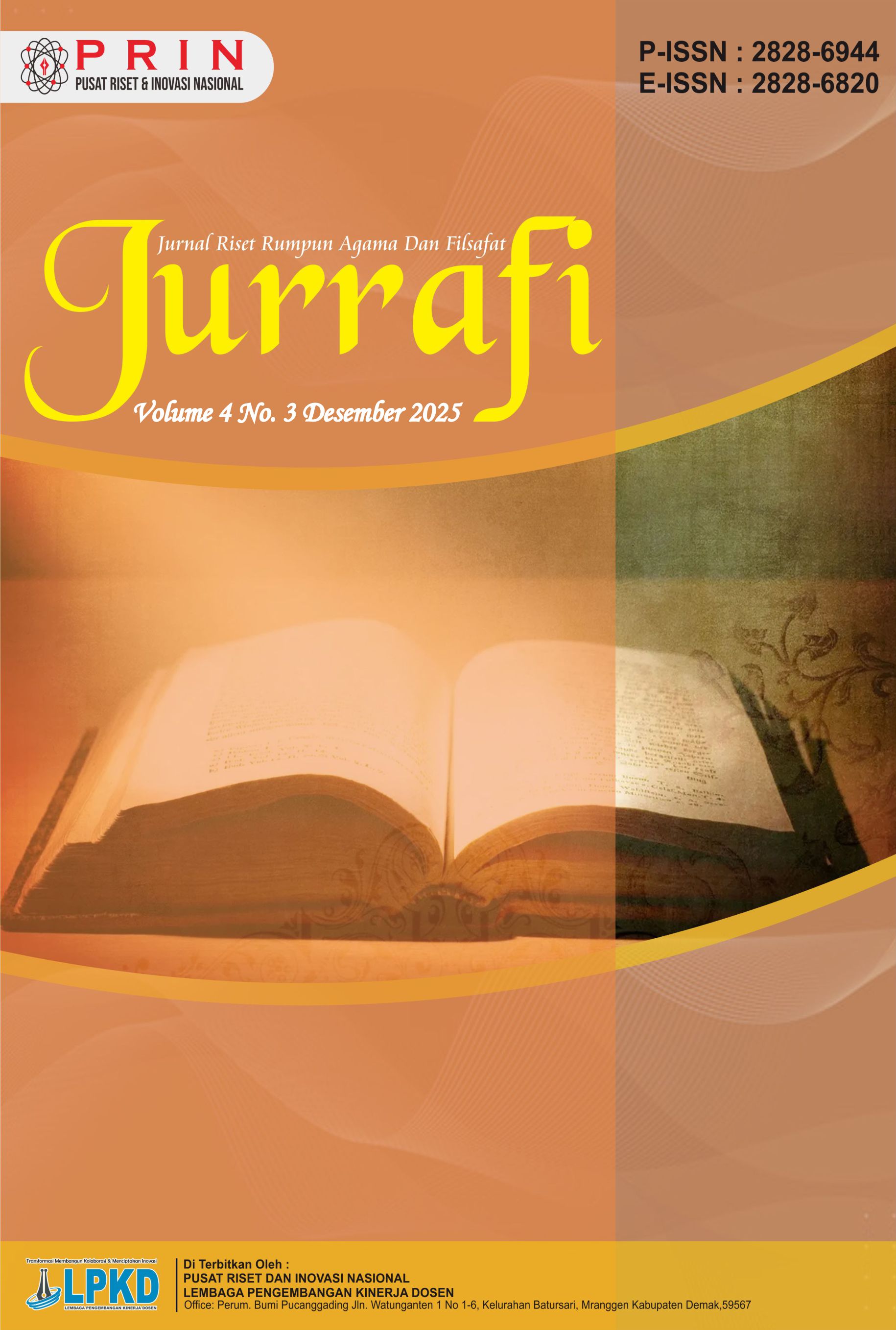
Mencari Makna di Balik Simbol: Studi Kasus Tentang Pawai Paskah 2025 di Kota Kupang dalam Perspektif Interaksi Simbolik
DOI:
https://doi.org/10.55606/jurrafi.v4i3.6375Keywords:
Easter parade, religious symbols, Symbolic interactionAbstract
This study analyzes the symbolic meaning of the 2025 Easter Parade in Kupang City using a symbolic interactionist approach, with a central focus on the cross as a primary symbol. The cross is not only understood as a sacred religious emblem but also as a medium of social communication whose meaning is dynamically constructed through interactions between parade participants, spectators, and particularly the actors portraying the figure of Jesus. These social interactions allow for the reinterpretation of the symbol’s meaning based on cultural contexts and participants' experiences.The findings reveal that deviant behavior exhibited by some actors portraying Jesus created a dissonance between the ideal meaning of Christ’s suffering and the actual performance displayed during the parade. This mismatch caused cognitive dissonance among viewers and had the potential to distort the intended spiritual message of the symbol. The incident underscores the importance of actors' awareness of the sacred nature of the symbol and the necessity for responsible and contextually appropriate representations in public rituals.The study also emphasizes that religious symbols are fluid and do not possess fixed or absolute meanings. Instead, they are subject to redefinition based on individual and collective experiences, cultural backgrounds, and public perceptions. Within the context of the Easter Parade, the cross becomes a performative medium that reflects the values, beliefs, and social dynamics of the diverse society in Kupang. This research employs a mixed-methods approach by integrating both quantitative and qualitative data to provide a more comprehensive understanding. Quantitative data offers general insights into audience perceptions of the symbolic performance, while qualitative data explores deeper layers of symbolic meaning and the sociocultural implications that arise. Overall, this study contributes to the discourse on religion, symbolism, and public ritual by highlighting the importance of intentionality, appropriate representation, and cultural sensitivity in maintaining the sacredness of religious symbols in dynamic and pluralistic public spaces
Downloads
References
Barker, C. (2004). Cultural Studies: Teori & Praktik (Terjemahan). Yogyakarta: Kreasi Wacana.
Barker, C., & Galasinski, D. (2001). Cultural Studies and Discourse Analysis: A Dialogue on Language and Identity. London: SAGE Publications.
Blumer, H. (1969). Symbolic Interactionism: Perspective and Method. Englewood Cliffs, NJ: Prentice-Hall.
Denzin, N. K., & Lincoln, Y. S. (Eds.). (2011). The SAGE Handbook of Qualitative Research (4th ed.). Thousand Oaks, CA: SAGE Publications.
Eriyanto. (2001). Analisis Wacana: Pengantar Analisis Teks Media. Yogyakarta: LKiS.
Fairclough, N. (1995). Critical Discourse Analysis: The Critical Study of Language. London: Longman.
Hall, S. (2014). Representasi: Representasi Budaya dan Praktik-Praktik Bahasa (Nurhadi, Trans.). Yogyakarta: Jalasutra. (Karya asli diterbitkan 1997)
Haryatmoko. (2016). Critical Discourse Analysis (Analisis Wacana Kritis). Jakarta: PT. Kanisius.
Mead, G. H., Biesta, G. J. J., & Tröhler, D. (2015). Philosophy of Education. Taylor & Francis. https://books.google.co.id/books?id=shTvCgAAQBAJ
Sari, M. N., Abdillah, L. A., Asmarany, A. I., Rakhmawati, I., Pattiasina, P. J., Kusnadi, I. H., Hasanuddin, R., Pradana, I. P. Y. B., & Rela, I. Z. (2024). Metode Penelitian Kualitatif (Konsep & Aplikasi). MEGA PRESS NUSANTARA. https://books.google.co.id/books?id=gPVNEQAAQBAJ
Schechner, R. (2006). Performance Studies: Sebuah Pengantar (Terjemahan). Yogyakarta: IRCiSoD.
Siregar, N. S. S. (2016). Hambatan tentang komunikasi lintas budaya. Perspektif, 1(2), 100–110.
Sobur, A. (2009). Analisis Teks Media: Suatu Pengantar untuk Analisis Wacana, Analisis Semiotika dan Analisis Framing. Bandung: Remaja Rosdakarya.
Sulistyanto, P. (2009). Antropologi Teater: Teori dan Aplikasi. Yogyakarta: Pustaka Pelajar.
Suryajaya, M. (2016). Ensiklopedia Filsafat Modern. Jakarta: KPG.
Turner, V. (2008). Dari Ritual ke Teater: Kajian tentang Performativitas (Terjemahan). Yogyakarta: Kanisius.
Downloads
Published
How to Cite
Issue
Section
License
Copyright (c) 2025 Jurnal Riset Rumpun Agama dan Filsafat

This work is licensed under a Creative Commons Attribution-ShareAlike 4.0 International License.
_001.jpg)