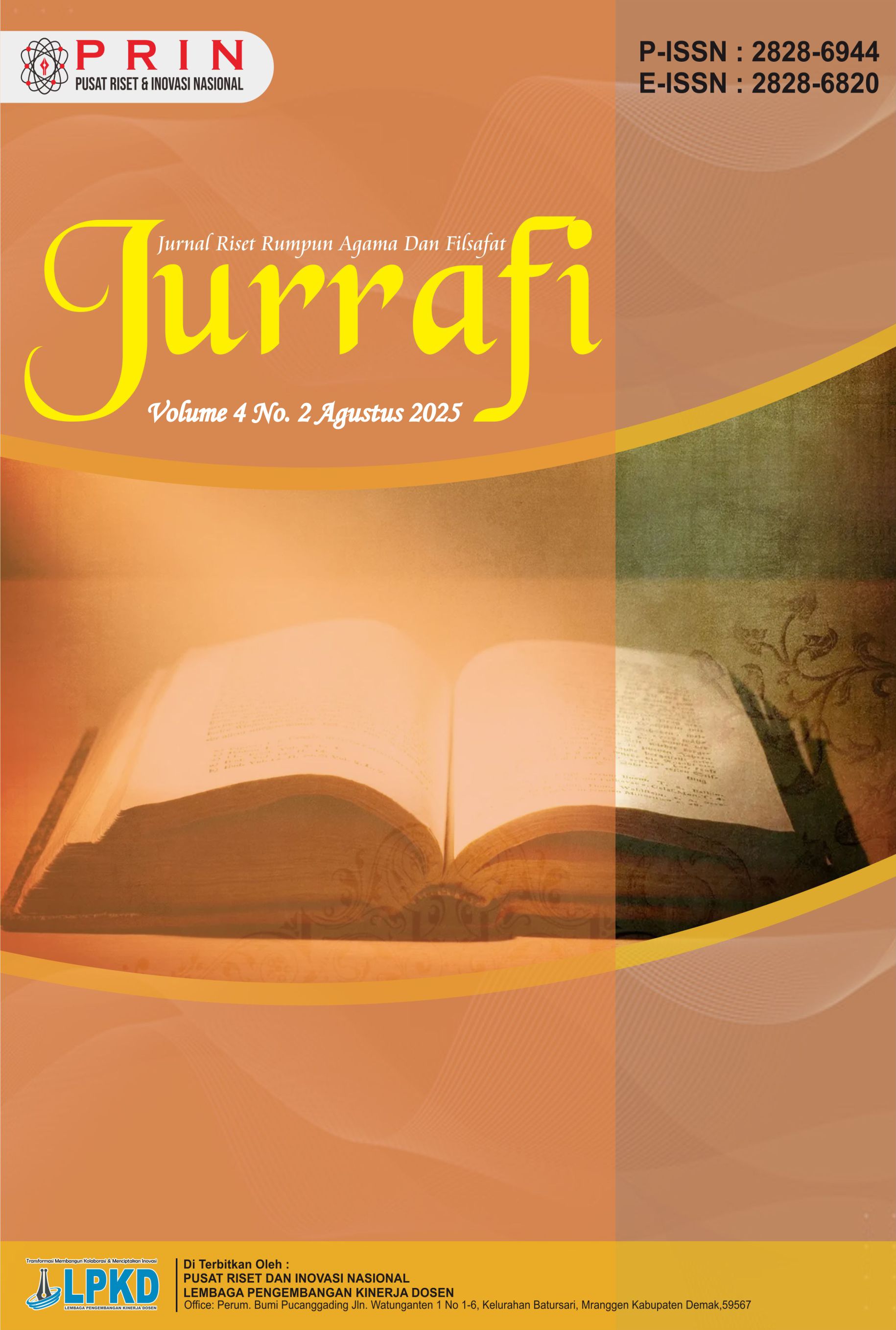
Fenomena Embriologi dalam Al-Qur’an: Analisis Ayat-Ayat Penciptaan Manusia Perspektif Tafsir Ilmi
DOI:
https://doi.org/10.55606/jurrafi.v4i2.5456Keywords:
Science, tafsir ilmi, biology, natural phenomenaAbstract
This study aims to reveal the urgency of science in the perspective of the Qur'an, especially through the interpretation of Surah Al-Baqarah verse 164. This verse represents various natural phenomena and life processes that reflect the greatness and power of Allah, as well as being a source of reflection for intelligent humans. By using tafsir tahlili method and tafsir ilmi approach, this study emphasizes the integral relationship between revelation and science. The results of the study show that this verse encourages Muslims to observe, research, and take lessons from the signs of Allah's greatness in the universe, as well as being the basis for integration between faith and science. In conclusion, science is not only important in the development of human life, but also as a way to get closer to the Creator.
Downloads
References
Acim, S. A. (2023). Konsep penciptaan manusia dalam perspektif Al-Qur’an QS. Al-Mu’minun (23): 12–14 dalam tafsir Al-Azhar. El-Umdah: Jurnal Kajian Ilmu Al-Qur’an dan Tafsir, 6(1), 46–57. https://doi.org/10.20414/El-Umdah.v5i2
Al-Azhar, H. M. (2020). Tafsir Al-Azhar. Jakarta: Pustaka Panjimas.
Al-Qurtubi, M. A. (2008). Tafsir al-Qurtubi (Jilid 12). Beirut: Dar al-Kutub al-Ilmiyah.
Embryology Online. (n.d.). Early Human Development. Retrieved from https://embryology.med.unsw.edu.au
Hasanudin, M. (2018). Konsep embrio manusia perspektif Al-Qur’an dan sains (kajian analisis QS. Al-Mu’minun ayat 12–14). Qaf, 3(1), 1–15.
Mitchell, B., & Sharma, R. (2009). Embriologi kedokteran dasar dan klinis. Jakarta: EGC.
Moore, K. L. (1986). A scientist's interpretation of references to embryology in the Qur’an. Journal of the Islamic Medical Association, 18, 15–16.
Moore, K. L., & Persaud, T. V. N. (2008). The developing human: Clinically oriented embryology (8th ed.). Philadelphia: Saunders Elsevier.
Murtaza, A. M. (2019). Signifikansi tentang ayat penciptaan manusia Q.S. 23: 12–14 (Studi analisis hermeneutika ma’na cum maghza). PAPPASANG I, 14(23), 12–14.
Quraish Shihab, M. (1996). Membumikan Al-Qur’an: Fungsi dan peran wahyu dalam kehidupan masyarakat. Bandung: Mizan.
Quraish Shihab, M. (2002). Tafsir Al-Mishbah: Pesan, kesan dan keserasian Al-Qur'an (Vol. 12). Jakarta: Lentera Hati.
Raffie Rasyad, M., Wiradhana, M. R., & Al-Aqsa, M. S. (2023). Learning class tauhid and akhlak proses penciptaan manusia. Gunung Djati Conference Series, 22, 198–214.
Sharma, R. (2011). Essentials of human embryology. India: Jaypee Brothers Medical Publishers.
Zakir Naik. (2010). The Qur'an and modern science: Compatible or incompatible? Riyadh: Darussalam.
Zuhri, N. Z., & Abdurrahman, M. (2023). I’rab dan tafsir Al-Qur’an: Fase penciptaan manusia dalam perspektif QS. Al-Mu’minun ayat 12–14. Hamalatul Qur’an: Jurnal Ilmu-Ilmu Al-Qur’an, 4(1), 63–68.
Downloads
Published
How to Cite
Issue
Section
License
Copyright (c) 2025 Jurnal Riset Rumpun Agama dan Filsafat

This work is licensed under a Creative Commons Attribution-ShareAlike 4.0 International License.
_001.jpg)