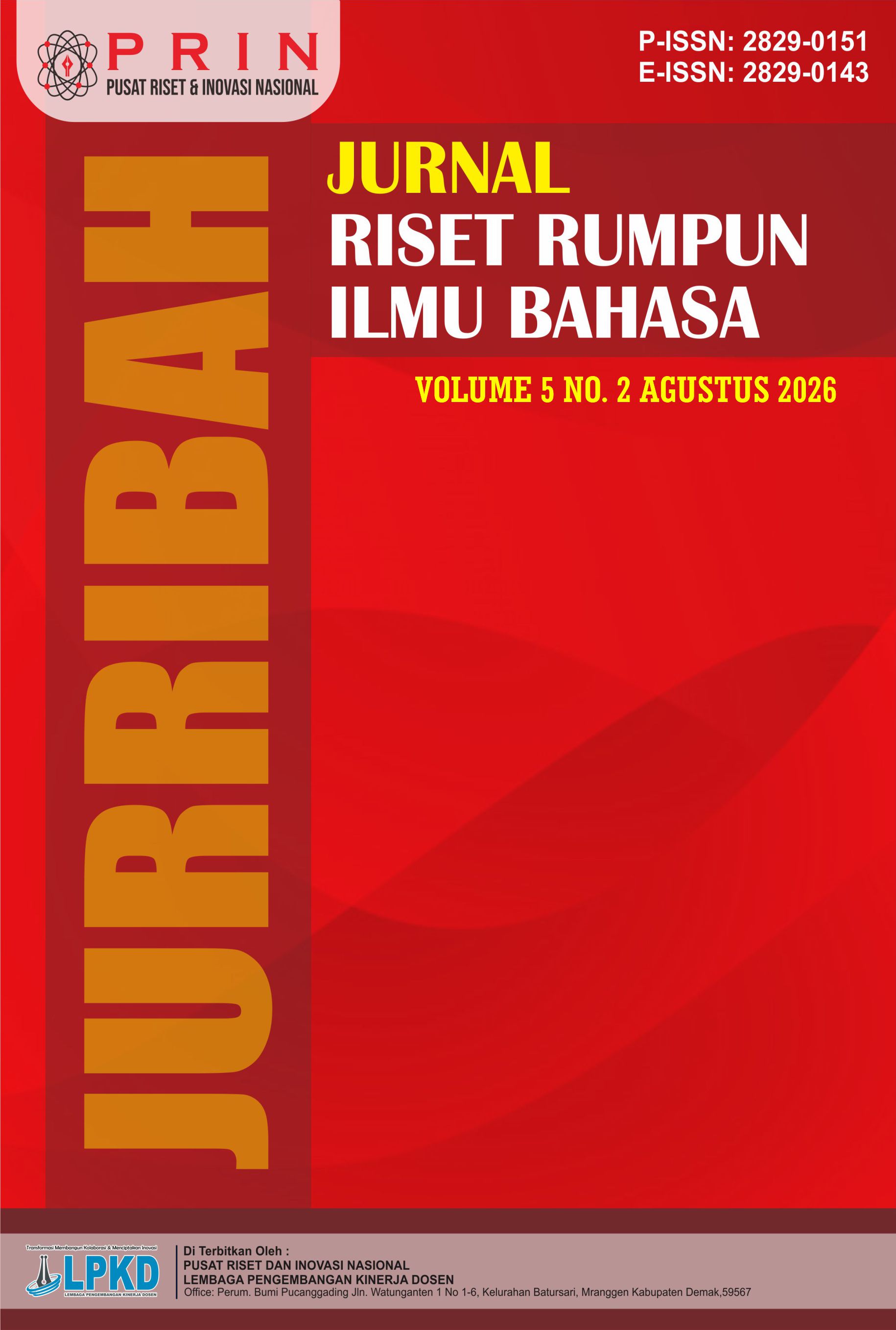
Grammatical Accuracy in Graph Description Among EFL Learners
DOI:
https://doi.org/10.55606/jurribah.v5i2.9148Keywords:
Academic Writing, Efl Learners, English Grammar, Grammatical Accuracy, Graph DescriptionAbstract
The ability to describe graphs accurately in English is an essential academic skill for EFL learners, particularly in higher education contexts where students are required to interpret and communicate visual data. However, many learners still experience difficulties in producing grammatically accurate graph descriptions. This study aims to investigate the level of grammatical accuracy demonstrated by EFL learners in graph description tasks and identify the grammatical aspects that require further improvement. Employing a descriptive qualitative approach, the research analyzed 30 samples of students’ written graph descriptions produced by undergraduate learners. The analysis focused on several grammatical aspects, including subject–verb agreement, tense consistency, article usage, sentence structure, prepositions, and punctuation. The findings reveal that students frequently struggle with subject–verb agreement and article usage, while punctuation errors occurred less frequently. The study highlights that grammatical accuracy remains an important challenge for EFL learners in academic writing tasks involving data interpretation. Therefore, it is recommended that grammar instruction be integrated more intensively into graph description activities in English classes. The findings are expected to contribute to the development of more effective teaching strategies in academic writing instruction for EFL learners.
Downloads
References
Aziz, Z. A., Fitriani, S. S., & Amalina, Z. (2020). Linguistic errors made by Islamic university EFL students. Indonesian Journal of Applied Linguistics, 9(3), 733–745. https://doi.org/10.17509/ijal.v9i3.23209
Firdausi, N. A. (2022). Surface strategy taxonomy revisited: Grammatical error analysis in academic writing. Journal of English Language Studies, 7(2), 100–115. https://doi.org/10.30870/jels.v7i2.15186
Fitrawati, & Safitri, D. (2021). Students’ grammatical errors in essay writing: A pedagogical grammar reflection. International Journal of Language Education, 5(2), 74–88. https://doi.org/10.26858/ijole.v5i2.14633
Hidayat, S., & Krismanti, T. (2022). An analysis of grammatical errors in oral storytelling among Indonesian EFL learners. Journal of English Teaching Studies, 5(1), 33–44. https://doi.org/10.33369/jets.v5i1.20453
Lee, J. H. (2019). Teaching academic writing through visual data interpretation. English for Specific Purposes, 54, 11–22. https://doi.org/10.1016/j.esp.2019.03.004
Monny, S., & Pratiwi, D. (2022). Types of grammatical errors in EFL learners’ writing: An error analysis study. Journal of Language and Education, 8(2), 67–79. https://doi.org/10.17358/jle.8.2.67
Mubarok, Y., & Budiono, T. (2022). An error analysis on EFL students’ writing. Englisia: Journal of Language, Education, and Humanities, 9(2), 187–203. https://doi.org/10.22373/ej.v9i2.11386
Prasetyo, H., & Lestari, N. (2021). Academic writing difficulties among Indonesian EFL learners. Journal of English Education and Linguistics Studies, 8(1), 55–68.
Rizqullah, A. M., Sudiro, S., & Karim, S. A. (2023). A closer look at the EFL students’ grammatical errors in writing descriptive text. Ethical Lingua: Journal of Language Teaching and Literature, 10(1). https://doi.org/10.30605/25409190.559
Rosyada, A. (2024). Errors and mistakes in second language learning: A pedagogical perspective. International Journal of Applied Linguistics, 14(1), 45–56. https://doi.org/10.17509/ijal.v14i1.40001
Rusmiati, R. (2021). Subject–verb agreement errors in English writing among Indonesian learners. International Journal of English Linguistics, 11(3), 140–146.
Tambunan, A. R. S., Andayani, W., Sari, W. S., & Lubis, F. K. (2022). Investigating EFL students’ linguistic problems using Grammarly as automated writing evaluation feedback. Indonesian Journal of Applied Linguistics, 12(1), 16–27. https://doi.org/10.17509/ijal.v12i1.46428
Wang, Y. (2020). Error analysis from a developmental perspective: Understanding learner language. TESOL Quarterly, 54(1), 176–183. https://doi.org/10.1002/tesq.427
Wijayanti, E., & Putra, A. (2023). Improving grammatical accuracy in EFL academic writing through guided feedback. Journal of Applied Linguistics and Language Research, 10(2), 101–112.
Yuliana, T., & Hapsari, F. (2024). The role of grammar instruction in improving students’ academic writing skills. Journal of English Language Teaching and Learning, 5(1), 44–56.
Ni Luh Kade Yuliani Giri, I Gusti Ayu Gde Sosiowati, I Wayan Pastika, & Made Ratna Dian Aryani. (2025). Grammatical Blocking of Universal Uptake in Japanese Ad-vertising Texts: Wake-Framing, Case Restriction, and Event Packaging. International Journal of Multilingual Education and Applied Linguistics, 3(1), 13–28.
Helmi Wibowo, Benny Daniawan, & Erna Auparay. (2025). Investigating Longitudinal Effects of Adaptive Digital Learning Ecosystems on Self Regulated Learning and Academic Persistence. International Journal of Educational Technology and Society, 2(4), 68–77. https://doi.org/10.61132/ijets.v2i4.466
https://doi.org/10.61132/ijmeal.v3i1.428
Monika Gisthi Secaresmi, David Kristiaan Paath, Wilibrordus Megandika Wicaksono, Adit Setiawan, & Siti Maskanah. (2025). Correlation of Reading Interest with Writing Ability of STIKOM Students Yos Sudarso Purwokerto. International Journal of Educational Development, 2(3), 62–73. https://doi.org/10.61132/ijed.v2i3.325
Anak Agung Sagung Shanti Sari Dewi, Ni Luh Ketut Mas Indrawati, Ketut Artawa, & Ni Luh Nyoman Seri Malini. (2025). Motivation of Students Learning Indonesian as a Foreign Languag in BIPAS: An In-Country Learning Program at Udayana University in Bali. International Journal of Multilingual Education and Applied Linguistics, 2(3), 19–29. https://doi.org/10.61132/ijmeal.v2i3.386
Ni Ketut Alit Ida Setianingsih, & Ketut Santi Indriani. (2025). Colloquial Language Use in Public Informational Signs . International Journal of Multilingual Education and Applied Linguistics, 2(3), 30–38. https://doi.org/10.61132/ijmeal.v2i3.385
Downloads
Published
How to Cite
Issue
Section
License
Copyright (c) 2026 Dini Riandini

This work is licensed under a Creative Commons Attribution-ShareAlike 4.0 International License.